
Excellence in Processing & Quality Control
At NEXGEN TRADING, we don’t just supply bitumen – we understand and control its processing from crude selection to final product. Our 15+ years of expertise ensures every batch meets stringent quality parameters

Join Our Global Network of Bitumen Professionals
Introduction to the Core Process
At the heart of petroleum refining lies the Fractional Distillation Tower – the critical first step that separates crude oil into its fundamental components, including the valuable residue that becomes bitumen. Understanding this process is essential to appreciating why bitumen quality varies and how we ensure consistent specifications for our clients.
What is a Fractional Distillation Tower?
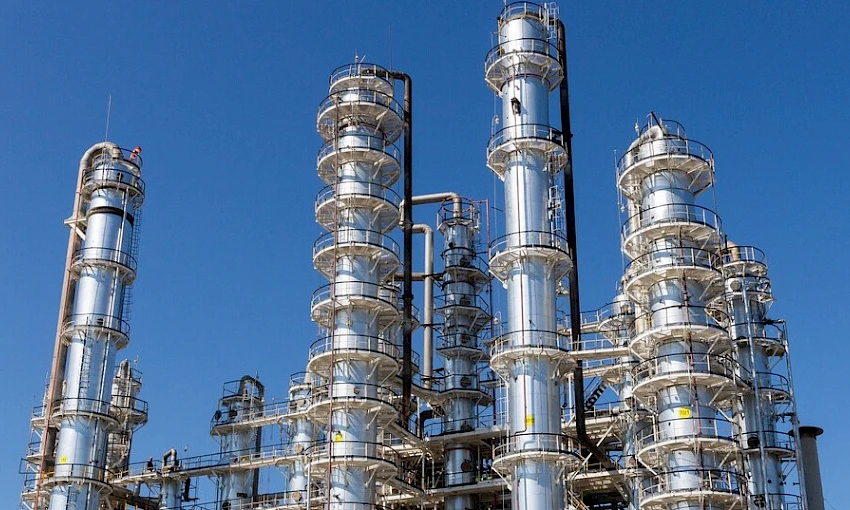
A fractional distillation tower (also called a distillation column or crude tower) is a vertical industrial structure, typically 30-50 meters tall, where crude oil is systematically separated into different hydrocarbon fractions based on their boiling points. This physical separation process occurs before any chemical modification takes place.
How the Tower Works: A Step-by-Step Breakdown
1. Input: Pre-Heated Crude Oil
-
Crude oil is first heated to approximately 350-400°C in a furnace
-
It enters the tower as a hot vapor/liquid mixture at the lower section
2. Temperature Gradient & Separation
-
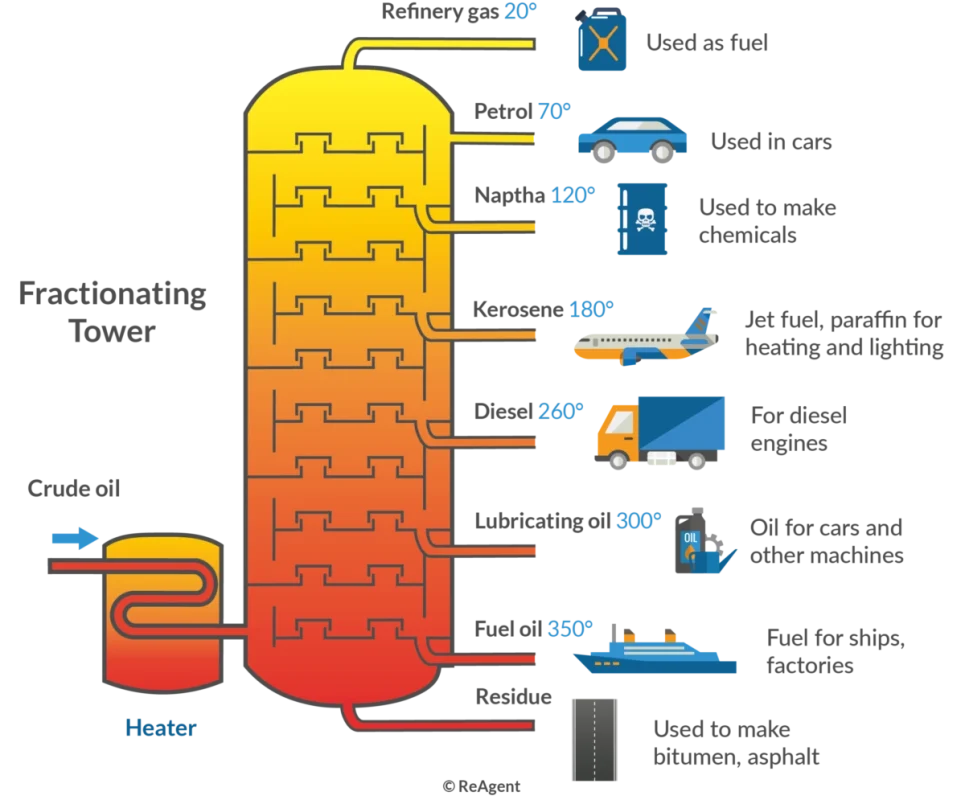
Key Principle: The tower maintains a precise temperature gradient – hottest at the bottom (~350°C), coolest at the top (~20°C)
-
Separation Mechanism: As hydrocarbon vapors rise through the tower, they cool. Each component condenses at a different height based on its boiling point:
-
Lighter fractions (low boiling points) rise to the top
-
Heavier fractions (high boiling points) condense lower down
-
Bitumen collects at the very bottom as it has the highest boiling point
-
3. Collection Trays & Draw-Off Points
The tower contains numerous horizontal trays or packing materials where condensation occurs. Fractions are drawn off at different levels:
FROM TOP TO BOTTOM:
| Tray Level | Fraction Collected | Boiling Range | Primary Use |
|---|---|---|---|
| Top | Refinery Gases | < 40°C | LPG, fuel gas |
| Upper | Gasoline/Naphtha | 40-180°C | Petrol, solvents |
| Middle | Kerosene/Jet Fuel | 180-260°C | Aviation fuel, lighting |
| Lower Middle | Diesel/Gas Oil | 260-340°C | Diesel fuel, heating oil |
| Lower | Lubricating Oil | 340-400°C | Lubricants, waxes |
| Bottom | Residue (Bitumen Feedstock) | > 400°C | BITUMEN, heavy fuel oil |
4. Vacuum Distillation: The Bitumen Enhancement Stage
The atmospheric residue from the bottom of the primary tower undergoes further refinement:
-
Process: The residue enters a Vacuum Distillation Unit (VDU) operating under reduced pressure
-
Why Vacuum? Lowering the pressure allows heavier hydrocarbons to vaporize at lower temperatures, preventing thermal cracking
-
Output: Produces Vacuum Gas Oil and the final Vacuum Residue, which is the premium feedstock for bitumen production


Technical Support
Our engineers can help select the optimal grade for your specific project conditions and requirements.
Why This Matters for Bitumen Quality
The Source Dictates the Product
Not all crude oils yield high-quality bitumen. Our 15+ years of experience enables us to select crude sources with optimal characteristics:
Ideal Crude for Bitumen Production:
-
Heavy, Sour Crudes: Higher asphaltene content → better bitumen yield
-
Specific Geographical Origins: Certain Middle Eastern, Venezuelan, and Canadian crudes are prized for bitumen production
-
Consistency: Regular sourcing from reliable fields ensures product uniformity
Quality Control Points in Distillation:
-
Temperature Control: Precise tray temperatures determine fraction purity
-
Residence Time: Affects the degree of separation
-
Tower Pressure: Critical for efficient separation
-
Monitoring Systems: Continuous analysis of fractions leaving the tower